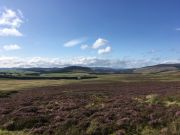
Glenlivet Estate - Banner showing the rolling hills on the Glenlivet Estate. The typeface is a classic style stating Glenlivet Estate and the crown Estate Logo is top left linking to the CE website
     
  Home · Access information · Walks, trails & outdoor activities · Publications · Places of interest · Accommodation · Wildlife · Estate management · How to get here · Educational visits & resources · Photo library · Ranger services & guided walks · Access for all · Links · Activities, crafts & local info · History · Geology & physical characteristics · News  
     
spacer
   
spacer
  spacer   spacer spacer  

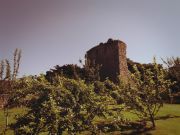
Drumin Castle

Bigger text

Smaller text

Help Page

Home Page


HISTORY - BALCORACH

On the west side of the bridge a car park at Balcorach marks the start of a very attractive riverside walk. If you are interested in exploring on foot the walk winds its way downstream, along the banks of the river for about 2 miles before rejoining the main road at Alltnaglander. However, if you do not wish to go as far, about 1/2 mile from the car park lies the Knock Earth House, an interesting site of historical interest, believed to be an illicit whisky still.

This can be reached by following the farm track heading downstream from the car park, turning left at the first gate and following the track across the field towards the isolated cottage next to the Knock farmhouse. The Earth house consists of a stone lined underground chamber, which when first discovered was thought to be a ‘souterrain’ or food store dating back to the Bronze Age. Recent archaeological investigations have suggested that in fact it may well have been built or adapted for use as an illicit still, disguised by an adjacent corn drying kiln. While the kiln is now somewhat collapsed, the underground chamber is well preserved and it is easy to imagine the secret ‘Peatreekers’ - as the smugglers were known - tending their sma’ still, with the wafting smell of peat smoke and barley disguised by the aroma of wood smoke from the neighbouring drying kiln. The kiln would be used to dry the harvest before winter storage, and only the canniest of excise men or ‘gaugers' as they were known, would have guessed the secret that lay beneath. It is said that many similar chambers lie buried and undiscovered in the Glenlivet countryside.

Even if you do not make the journey to the Earth House, it is worth leaving your car for a short walk along the river bank, or for another view of the river from the bridge, where you may spot some of the birds which can often be seen in the strath. Dippers, with their prominent white throats, frequently dart up and downstream, or bob up and down on rocks in the river, before diving under to catch the insect lava that lurk among the stones. Goosanders are sometimes seen flying above the water and grey herons often stalk fish in the shadows of the trees. Noisy orange billed oystercatchers fill the air in spring and summer with their piping calls, while swallows, sand and house martins, swifts, and grey wagtails are commonly seen in summer feeding on the bounty of insects which hover above the water or buzz among the trees and riverside vegetation.

A smuggler - not a real one!
A whisky smuggler

Glenlivet welcomes you to explore its tracks and byways.

   
History of Glenlivet Introduction
Tomintoul
Campdalmore
Bridge of Avon
Battle of Cromdale
Kirkmichael
Balcorach
Drumin Castle
The Packhorse Bridge
Scalan and Braes of Glenlivet
Battle of Glenlivet
Glenlivet Distillery
Whisky Smuggling
The Lecht
           
spacer
   
spacer
Glenlivet Estate - Banner showing beautifully marked stones, the Glenlivet Estate in typeface classic and the crown Estate Logo - click the Logo to go to the Crown Estate web site