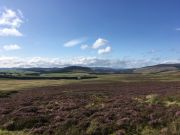
Glenlivet Estate - Banner showing the rolling hills on the Glenlivet Estate. The typeface is a classic style stating Glenlivet Estate and the crown Estate Logo is top left linking to the CE website
     
  Home · Access information · Walks, trails & outdoor activities · Publications · Places of interest · Accommodation · Wildlife · Estate management · How to get here · Educational visits & resources · Photo library · Ranger services & guided walks · Access for all · Links · Activities, crafts & local info · History · Geology & physical characteristics · News  
     
spacer
   
spacer
  spacer   spacer spacer  

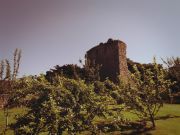
Drumin Castle

Bigger text

Smaller text

Help Page

Home Page


HISTORY - THE SOLDIER STONE & THE BATTLE OF CROMDALE

Further downstream close to the point where a tributary, the Conglass Water joins the Avon , lies the ‘Soldier Stone’ a standing stone with the date 1690 etched into its surface. This marks the site where a soldier fell after the battle of the Haughs of Cromdale in that same year. This skirmish took place during an early period of Jacobite unrest and it was fought on the other side of the Cromdales near Grantown-on-Spey. Government forces led by Sir Thomas Livingston, surprised and routed 400 clansmen who had been making raids on Strathspey from their strongholds further west. Many of the clansmen fled eastwards over the hills only to collapse later from their wounds.

The Battle of Cromdale took place on May 1st 1690 under the shadow of Creagan a’Chaise on the other side of the Cromdale Hills. More of a routing than a battle, 400 Highland Clansmen under the leadership of Colonel Cannon were killed or captured by government troops led by Sir Thomas Livingstone.

Colonel Cannon’s 1500 strong Jacobean army, made up of MacDonald, MacLean, Cameron, MacPherson and Grant’s of Invermoriston clansmen, had, until then, been making raids on Strathspey from their strongholds in Lochaber and the West. Sir Thomas Livingstone’s forces, garrisoned at Inverness , were given the task of intercepting Cannon’s forces by blocking their retreat to the west. Livingstone was led by the local Grants of Strathspey and advanced swiftly with six troops of Scots Dragoons, a battalion of foot soldiers and, crucially, two troops of cavalry.

The evening before the battle Cannon’ s men were camped at Lethendry, unaware of the Government troops descending to the Spey from the Dava Moor. Colonel Cannon was not the most experienced or skilled commander and had previously been beaten off from an attack on Dunkeld. This defeat of the Jacobites gave government forces time to muster fresh troops and to erect strongholds. On the 1st of May, at dawn, troops were spotted crossing the Spey and the alarm raised but this only prompted Sir Thomas to mount a sudden cavalry attack on the Jacobite camp.

Part of the way was concealed by birch and the attack was so sudden that many of the clansmen had no time to reach for their belted plaids or weapons. Many fled quite naked, some up the northern slopes of the Cromdales which were too steep for the horses and descended to Avonside. One of these men perished later from his wounds and died here. Those who faced the enemy could only give faint resistance. About 400 were killed or captured on the day with others rounded up in Lethendry Castle and Mill. Some Camerons and Macleans were pursued across the Spey and caught and killed near Aviemore just short of the safety of the crags of Craigellachie.

According to General Mackay, Army Commander in Scotland at the time, the Governments forces lost no soldiers and only 7 or 8 horses, their success being due to three factors.

(1) Locked gates at Castle Grant, Grantown-on-Spey prevented anyone leaving to warn the Jacobite force. (2) Cavalry approached through a narrow pass (presumably by Huntly’s Cave) and were not ambushed. (3) Jacobite forces were not camped on the usual defendable broken ground but on open ground.

The Battle of Cromdale, immortalised by the pipe tune and ballad ‘The Haughs of Cromdale’, led to the dispersal of the Jacobite forces and cessation of hostilities for some time. It was 25 years until the next uprising in 1715.

This rout of the Jacobites is also commemorated in a brisk ballad:

“As I came in by Auchindoun

A little wee bit frae the toun

When to the Highlands I was boun

To view the Haughs of Cromdale

I met a man in tartan trews

I speirit him - what was the news?

Quo’ he - the Heiland army rues

That e’er they came to Cromdale”

You may wish to stop at the soldier stone on your journey through the Strath, and there is a small lay-by close-by which allows you to pull off the road just after you cross the bridge over the Conglass Water


Glenlivet welcomes you to explore its tracks and byways.

   
History of Glenlivet Introduction
Tomintoul
Campdalmore
Bridge of Avon
Battle of Cromdale
Kirkmichael
Balcorach
Drumin Castle
The Packhorse Bridge
Scalan and Braes of Glenlivet
Battle of Glenlivet
Glenlivet Distillery
Whisky Smuggling
The Lecht
           
spacer
   
spacer
Glenlivet Estate - Banner showing beautifully marked stones, the Glenlivet Estate in typeface classic and the crown Estate Logo - click the Logo to go to the Crown Estate web site