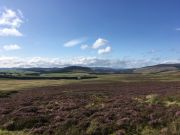
Glenlivet Estate - Banner showing the rolling hills on the Glenlivet Estate. The typeface is a classic style stating Glenlivet Estate and the crown Estate Logo is top left linking to the CE website
     
  Home · Access information · Walks, trails & outdoor activities · Publications · Places of interest · Accommodation · Wildlife · Estate management · How to get here · Educational visits & resources · Photo library · Ranger services & guided walks · Access for all · Links · Activities, crafts & local info · History · Geology & physical characteristics · News  
     
spacer
   
spacer
  spacer   spacer spacer  

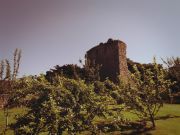
Drumin Castle

Bigger text

Smaller text

Help Page

Home Page


HISTORY - THE LECHT

At Tomintoul the A939 can be followed to the infamous Lecht pass and present day ski centre, notorious for being one of the most regularly snow-blocked roads in the country. The road follows the route of the Old Military Road and in fine summer weather, or when the heather is in bloom, the route over the hills is one of the most scenic drives in Scotland - and definitely one to savour.

A car park at the Well of the Lecht sits at the foot of the steep climb to the ski centre. Here you can explore further on foot, where a short attractive walk leads to the former Lecht Mine – which when in operation during the mid Nineteenth Century was the largest ever manganese mine in Scotland.

The rocks here around the mine, were originally laid down in a marine environment many millions of years ago, but they were changed and ‘metamorphosed’ during the mountain building period which created the Cairngorm granites around 408 million years ago, resulting in deposits rich in a variety of metals and minerals - some of which are found nowhere else in Scotland. The mine was first opened during the 1730’s when iron ore was exploited and carried on pack pony to be smelted in Nethy Bridge in Strathspey, but the operation lost money and the mine closed after a few years. However, during the 1840’s it was reopened again, this time to supply manganese - which was shipped from the Moray coast to Newcastle and used in the manufacture of household bleach. The mine developed to become the largest and most actively worked manganese mine in Scotland employing 63 men at its peak, until cheaper imported ore made the operation uneconomic and it closed down 1846. It was during this second phase of mining operations that the building you see from the car park was built as a crushing plant and the machinery it once housed, included several heavy wheels including one 8 metres in diameter and another weighing at least a ton. These were manufactured in Aberdeen and had to be hauled all the way over the Lecht. Such was the difficulty of the task that the Corgarff minister’s bull had to be enlisted to lend its weight to get them up the hill!

While no machinery remains in the mine building today, the site provides an excellent opportunity to easily examine the industrial activities of over a century ago, and an interpretive display inside the building provides more information about the workings of the crushing plant. Although there are no open shafts or adits to give concern, the ground around the mine is rough and sometimes steep underfoot, so please take care if you explore further.

On your way to the mine you may spot a path on the left, heading up a steep bank. This is the route of the old whisky smuggling path out of the Braes. Though not a walk to attempt unprepared, for it is exposed and difficult to follow in mist, the path crosses the hills and eventually descends to reach the old Scalan Seminary. A short detour along it however, will give you an interesting perspective, looking down on the mine and the now vegetated spoil heaps.

You may also see more of the wildlife that inhabits this heathery heathland including the mountain hares that are frequently seen here, particularly in the spring when their white winter coat stands out starkly against the brown hills. An investigation of the heather will reveal, blaeberry, crowberry and other common moorland plants and you may even find the less common cloudberry, whose strawberry like leaves, white flowers and later red berries dot the hillside. Red grouse hide in the heather on which they feed, letting off a startling, cackling cry if disturbed, while in the summer meadow pipits dart around, their populations swollen by other summer visitors like swallows, swifts and wheatears, here to capitalise on the bounty of midges, crane flies and other insects. The piping calls of golden plovers may sometimes be heard in the distance, particularly near the summits of the hills, while you may see buzzards, kestrels, or short-eared owls preying on unwary birds and small mammals.

Closer to the car park, where you rejoin the main road lies a roughly carved slab of rock, erected as a memorial to the men that built this difficult stretch of the military road during the mid Eighteenth Century. Among other things it must have been thirsty work, for the soldiers chose the site of this well, where fine cool bubbling water comes to the surface, to erect a testimony to their efforts. Though a little difficult to decipher, the plaque reads:

“A.D 1754

Five companies of the

33rd regiment

Right Hon Lord Chas Hay, Colonel

Made this road from here to the Spey

A strong iron ladle attached to a strong chain once provided a means of refreshment for the weary walker, and the well no doubt provided sustenance to many a thirsty traveller before the days of the modern motor car made the ascent of the hill an easy one.

Part way along the road towards Tomintoul, lies a small cottage that sits on the right side of the road about 1 km from the Well of the Lecht. This is known locally as the Toplis cottage which for a few days in the 1920’s featured prominently in the national news as the hiding place of Percy Toplis, a suspected murderer.

Having escaped the force of law and order in Hampshire, where it was believed he murdered a taxi driver, Percy Toplis made his way to these secluded hills and camped, in this isolated, unoccupied shelter. He might have managed to remain undetected for a long time had it not been for his understandable desire to keep himself warm, for when he started to dismantle the furniture and the fences for firewood, suspicions were raised and the nearby farmer Mr Grant, together with the policeman from Tomintoul went to the cottage to investigate. They were met by Toplis with a revolver in his hand, and he had no hesitation in shooting at them. Both were wounded, while Toplis escaped over the Lecht on his bicycle. His luck persisted until he reached Penrith in Cumbria where the police finally caught up with him and shot him dead during a gun fight. One souvenir of his visit, which is believed to be still in the possession of a Tomintoul resident is a bill for repairs to his bicycle - unpaid of course!

If you wish to explore further and enjoy some of the other walks, trails and places of interest in the area, and learn more about the way in which the Estate is managed. The Crown Estate places a high priority on the development of visitor facilities and services on the estate and has worked hard to integrate tourism into what is very much a working multiple use Highland Estate

If you would like further information about any of the places mentioned in this narrative please call into the Estate Information Centre at the south end of Tomintoul or visit the excellent Tourist Information Centre and Museum in the village square. Both centres house a range of displays about the countryside and the history of the area, while a variety of publications about wildlife, history, walks, trails and other local information are available.

While an old local saying recounts that ‘you may greet’ when you first visit this land - it is certain ‘you will weep’ when you come to leave it - there is undoubtedly a special character to these hills and glens which never fails to leave it’s mark in the memory of those who come here. We hope you enjoy exploring Glenlivet Estate and haste ye back!

A smuggler - not a real one!
A whisky smuggler

Glenlivet welcomes you to explore its tracks and byways.

   
History of Glenlivet Introduction
Tomintoul
Campdalmore
Bridge of Avon
Battle of Cromdale
Kirkmichael
Balcorach
Drumin Castle
The Packhorse Bridge
Scalan and Braes of Glenlivet
Battle of Glenlivet
Glenlivet Distillery
Whisky Smuggling
The Lecht
           
spacer
   
spacer
Glenlivet Estate - Banner showing beautifully marked stones, the Glenlivet Estate in typeface classic and the crown Estate Logo - click the Logo to go to the Crown Estate web site