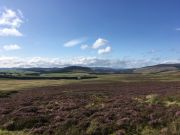
Glenlivet Estate - Banner showing the rolling hills on the Glenlivet Estate. The typeface is a classic style stating Glenlivet Estate and the crown Estate Logo is top left linking to the CE website
     
  Home · Access information · Walks, trails & outdoor activities · Publications · Places of interest · Accommodation · Wildlife · Estate management · How to get here · Educational visits & resources · Photo library · Ranger services & guided walks · Access for all · Links · Activities, crafts & local info · History · Geology & physical characteristics · News  
     
spacer
   
spacer
  spacer   spacer spacer  

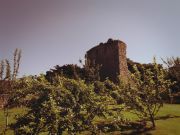
Drumin Castle

Bigger text

Smaller text

Help Page

Home Page


HISTORY - WHISKY SMUGGLING

Stories of smuggling in this district abound and some 200 illicit stills are reputed to have once smoked here in the Braes. Convoys of Highland garrons, laden with whisky ‘ankers’ or casks would regularly set out over the hills to supply markets throughout the north east and beyond. Ingenious methods were often used to get the whisky in to the towns - a common method involved using the bladder from a sheep or calf which was filled from barrels in some remote spot, then carried under women’s skirts, top hats, in milk pails, meal sacks and vegetable baskets - no doubt all of which contributed greatly to the maturing of the liquor !

While the smugglers may have been ingenious in their deceptions, so the ‘gaugers’ or excise men were wily and often highly courageous in pursuit of their foe. One such was Malcolm Gillespie of Skene, Aberdeenshire, who was highly respected by the smugglers and on one occasion in the 1820’s set off with only one companion to challenge a large convoy on the way to Inverurie from Glenlivet. As he met up with the approaching whisky laden carts, accompanied by at least 30 men, he stepped out and shouted “stop in the Kings name”. He was met with a gale of laughter , but undaunted, whipped out his pistols and shot the leading horse dead. The enraged smugglers immediately set upon him and though hugely outnumbered, Gillespie managed to injure a few with his remaining shot. Good timing saved him from almost certain death as more gaugers accompanied by the local militia, who had been forewarned, quickly arrived at the scene and averted an almost certain full scale battle. The militia however, were not too keen to get involved as many were the customers of these self same smugglers. The upshot was that Gillespie got his carts of whisky and his life, but the smugglers escaped to try again.

Today in more peaceful times the water that bubbles from springs high in the remote corries of the Ladder Hills, continues to be turned into whisky and of course fewer people are now involved - fewer even than you might expect, as the striking Braeval distillery is fully automated and requires only 2 men to watch over the process. Clear, spring water will always have marketable qualities and the anticipation of 21 st Century demands for mineral water have stimulated further investment in the natural resources of this remarkable area, in the form of a water bottling plant next to the distillery.

While whisky and water may offer employment to some, farming remains the mainstay of the local community - and to make ‘twae ends meet’ can be difficult, in these exposed parts, where the wind, rain, snow and bitter winter weather, combine to mould some hardy characters among the local population. The snow here can sometimes blow in with such force, it creates drifts as high as the cattle sheds and to step more than a few feet from your door may result in a major expedition. Many have fallen foul of such blizzards which can arrive suddenly and unexpectedly, and having lost their way finally succumb to the cold. One famous story involved a young girl, Margaret Cruikshank or the ‘Lass o’ the Lecht’ as she became known, who set off from Tomintoul one day in February 1860 to cross the Lecht Pass over the Ladder Hills. A gale sprung up and with it a violent blizzard, in which she became lost, following a burn she thought would lead to safety. In fact in the tragedy that unfolded, it was not the burn she supposed, and her route took her ever further into the hills. 500 men turned out to help in the attempt at rescue, but it was not until 3 months later that her frozen body was discovered in Strathdon, on the banks of the river Earnan, many miles from the Lecht.

It is easy to appreciate the difficulties that people embarking on such a journey would have faced in the days before modern vehicles, as the route over the Lecht in winter even today can take on epic proportions!

The road to Tomintoul from the Braes of Glenlivet crosses the exposed Feith Musach or ‘gloomy moss.’ Mechanical peat cutting operations on the roadside continue a long established tradition of peat cutting which for centuries was the main fuel source for Highland people, until modern electricity became more widely available. In cold, wet, poorly drained areas like this, the accumulation of the remains of mosses and bog plants over thousands of years creates this black, acid, peaty blanket which covers much of the hills, and peat has been harvested and used as a household fuel in the Highlands for hundreds of years. It is also burnt at the distillery maltings, the distinctive aroma of the smoke adding flavour to the brew.

For many crofters, the labour of peat cutting, is part of the annual cycle of tasks to be completed before the winter, but here modern machinery now saves some from this work and you may wish to stop and watch the tractors as they toil up and down the moss, when its dry enough to take their weight in the summer.

A smuggler - not a real one!
A whisky smuggler

Glenlivet welcomes you to explore its tracks and byways.

   
History of Glenlivet Introduction
Tomintoul
Campdalmore
Bridge of Avon
Battle of Cromdale
Kirkmichael
Balcorach
Drumin Castle
The Packhorse Bridge
Scalan and Braes of Glenlivet
Battle of Glenlivet
Glenlivet Distillery
Whisky Smuggling
The Lecht
           
spacer
   
spacer
Glenlivet Estate - Banner showing beautifully marked stones, the Glenlivet Estate in typeface classic and the crown Estate Logo - click the Logo to go to the Crown Estate web site